Agisiga, Central Papua – In the mist-covered highlands of Indonesia’s Central Papua, grief has once again settled over a community already exhausted by violence.
Luter Nabelau, a village official and father from Intan Jaya Regency, died this week after days in critical condition following a bomb explosion outside a Catholic church that wounded four civilians during a gathering of worshipers earlier this month.
The blast occurred on May 17 in the courtyard of St. Paul Catholic Station Church in Nabuni Mbamogo, a remote settlement in Agisiga District, where church grounds often serve not only as places of prayer, but also as rare communal safe spaces amid years of armed conflict.
Mr. Nabelau had been airlifted to Karitas Hospital in Timika after suffering severe injuries in the explosion. Despite emergency treatment and surgery, he died several days later, according to local officials.
“One victim, Mr. Luter Nabelau, has passed away, while the other three are still receiving treatment,” said Simson Weya, a member of the Intan Jaya Regional People’s Representative Council, speaking to local reporters on Tuesday.
Mr. Weya emphasized that the victim had no connection to armed groups operating in the region.
“He was not part of any combatant faction,” he said. “He was a civilian and served as the Social Affairs officer for Danggoa Village in Agisiga District.”
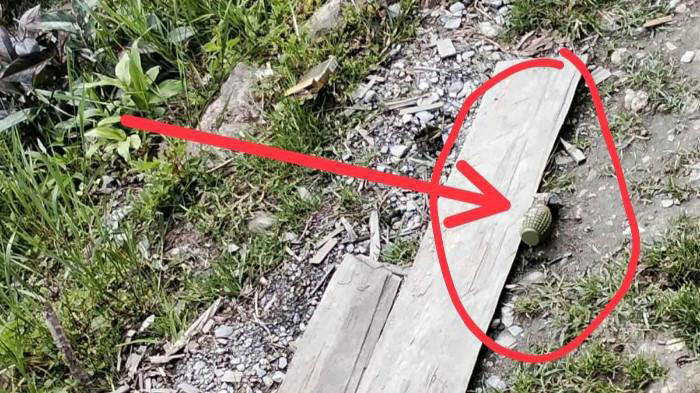
The explosion, described by witnesses as sudden and chaotic, erupted near the church compound while residents and congregants were gathered nearby. The device was said to resemble a grenade, though authorities have not publicly identified who planted it or whether it was linked to the long-running conflict between Indonesian security forces and separatist fighters from the Free Papua Movement, known locally as OPM or TPNPB.
Father Yanuarius Yance Yogi, dean of the Moni–Puncak Jaya Deanery, said the detonation sent worshipers scrambling in panic as debris tore through the churchyard.
The rugged terrain and limited medical infrastructure in Intan Jaya forced authorities to evacuate the victims by air to Timika, one of the nearest towns equipped for emergency surgery.
For many Papuans, the death of Mr. Nabelau has become another painful symbol of how civilians remain trapped between warring sides in one of Indonesia’s most militarized regions.
“Ordinary people know nothing about this conflict, yet they are the ones who suffer most,” Mr. Weya said, expressing frustration that churches, villages, women and children continue to be exposed to violence.
He called on both Indonesian security forces and separatist fighters to keep residential areas and places of worship free from armed activity.
“Let the TNI and OPM fight if they must,” he said. “But civilians must be protected.”