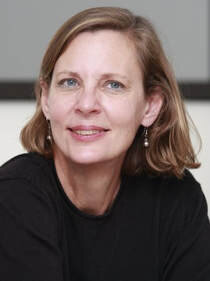
A middle-aged woman walked briskly into a seminar room at the Institute of Policy Studies, Lee Kuan Yew School of Public Policy, on Monday morning, August 19, 2019.
Tall and slim, with glasses and silvery hair, she moved with an energy that belied her age. Without hesitation she asked, “Why did you all come so early?” She was scheduled that morning to introduce narrative journalism to the 16 fellows of the 2019 Asian Journalism Fellowship.
There was no doubt: this was Janet Steele. She is a professor at the School of Media and Public Affairs, Columbian College of Arts and Sciences, George Washington University, Washington, DC, and also serves as director of the university’s Institute for Public Diplomacy and Global Communication.
I had long heard of her, especially after she researched and wrote The War Within: The Story of Tempo, an Independent Magazine in Soeharto’s Indonesia, considered the most comprehensive book ever written about the magazine.
Like many of my colleagues, I felt fortunate to finally meet her and learn directly about narrative journalism from someone so influential.
As she began her session, she drew a familiar shape on the whiteboard.
“Do you know this pyramid?” she asked. “In Indonesia, you usually call it the inverted pyramid.”
It was the basic structure we all learned as young reporters, writing news stories using the inverted-pyramid formula that answers the 5W+1H: What, Where, When, Who, Why, and How.
“But in narrative journalism,” Janet continued, sketching a semicircle shaped like the dome of a mosque, “the structure is different.” Narrative writing, she explained, is closely tied to description. Key elements of the plot are strategically placed at the beginning, middle, and end of the story.
In Indonesia, Pantau magazine, founded by journalists including Andreas Harsono, once championed what they called “literary journalism.” Andreas, a close friend of Janet, now works for Human Rights Watch. Janet, however, prefers the term narrative journalism, because for her, data and facts must remain at the heart of the story.
Why narrative journalism? Born on June 15, 1957, Janet then presented several remarkable pieces written in this style.
She quoted from an article published in The Washington Post on March 31, 2003. Written by Anthony Shadid, an American journalist of Lebanese descent, the piece was titled “A Boy Who Was ‘Like a Flower’; ‘The Sky Exploded’ and Arkan Daif, 14, Was Dead.”
Unusually, the article ran as the newspaper’s lead story. Shadid painted a vivid, heartbreaking portrait of Arkan Daif, a 14-year-old boy killed in Rahmaniya, Iraq. Through descriptive detail and carefully chosen scenes, the characters seemed to speak directly to the reader. Shadid captured the anxiety of a society in turmoil and the despair of citizens trapped in an unending war. The article was profoundly moving.
Janet often uses this piece in her classes across Southeast Asia. She has been a regular speaker for the Asian Journalism Fellowship in Singapore for six consecutive years.
Once again, my classmates and I felt grateful to learn from someone who openly professes her love for Indonesia.
Janet is no stranger to the country. She first came to Indonesia in 1992, and between 1997 and 1998 she taught at the University of Indonesia.
“I was in Indonesia when President Soeharto fell,” she recalled.
Soeharto, Indonesia’s second president, was forced to resign in 1998 after 32 years in power. He had been a close ally of Singapore’s Prime Minister Lee Kuan Yew.
As a journalism scholar, Janet also became fascinated by Islamic-based journalism in Indonesia.
“I was amazed to see journalism being taught at Islamic State Universities within the Faculty of Da’wah or Tarbiyah. It was extraordinary,” she said.
Her research on Islamic publications such as Sabili, a weekly digest, and Republika, a daily newspaper, led her to conclude that Islamic values clearly shaped their journalistic output. Unlike Sabili, which she found more emotional and hardline in tone, Republika represented what she saw as a modern, moderate form of Islam.
She was especially drawn to Qur’an Surah Al-Hujurat verse 6:
“O you who have believed, if there comes to you a disobedient one with information, investigate, lest you harm a people out of ignorance and become, over what you have done, regretful.”
To her, this mirrors one of journalism’s most fundamental principles: verification.
In this sense, Janet resembles Shadid. Though neither Muslim nor raised in a Muslim environment, she freed herself from prejudice and discovered what she called “the pearls hidden beneath the deep blue sea.”
At the end of her session with the colorful AJF cohort, she offered one final piece of advice:
“Learn from Nora Ephron, the screenwriter of When Harry Met Sally and Sleepless in Seattle.”
A journalist, Janet said, should think like a screenwriter: envisioning scenes, characters, and arcs. Only then can a story pull readers all the way to the final sentence. ***