Kebumen, Central Java — President Prabowo Subianto on Saturday said Indonesia aims to achieve self-sufficiency in beef within four to five years, expanding an ambitious food-security agenda that has already reached key milestones in rice, corn, and poultry production.
The target, he said, follows what he described as Indonesia’s recent progress in securing several strategic staples under his administration, though beef remains a gap in the country’s domestic supply chain.
“Alhamdulillah, many things have been achieved. We are now self-sufficient in food. We are self-sufficient in rice, corn, then protein — eggs and chicken,” Mr. Prabowo said during a visit to a shrimp cultivation event in Tegalretno Village, Kebumen Regency, Central Java, on Saturday (May 23). “Beef is still not there.”
“This is what we are working on. Maybe in four years, five years, we will be self-sufficient in beef,” he added.
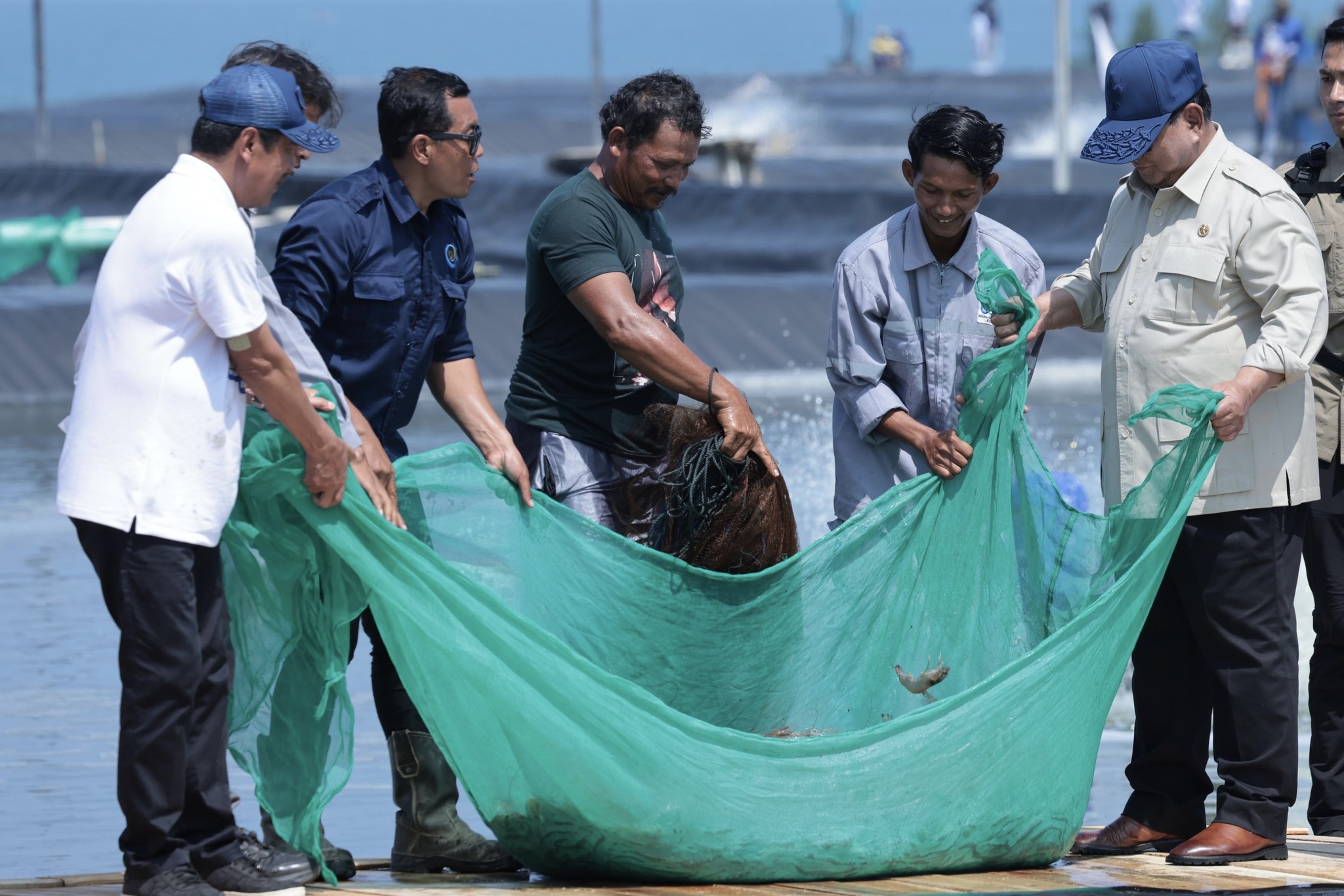
The remarks were delivered against the backdrop of a large-scale aquaculture project in Kebumen, part of a broader government push to expand domestic food production and reduce reliance on imports. The shrimp farm visit was intended to highlight Indonesia’s efforts to strengthen rural economies through so-called “productive projects” that combine export potential with job creation.
Food security has become a central theme of Mr. Prabowo’s presidency, particularly as global supply chains remain vulnerable to geopolitical tensions and regional conflicts.
“Food is relatively secure for us,” he said. “In the world, there are many conflicts, wars everywhere. We are grateful to God that we are not involved. But we must remain vigilant.”
The president also emphasized that Indonesia must strengthen its national resilience, including in defense and natural resource governance, to ensure that the country’s wealth is not lost to external interests.
“We must have strength. That is why we are building our defense capabilities to protect our wealth,” he said.
In his remarks, Mr. Prabowo reiterated a long-standing theme of his economic agenda: greater domestic control over national resources and more assertive state management of strategic industries.
“Now our wealth is managed by ourselves. We do not want our wealth to continue being played with by certain individuals, by certain countries. This has already been done, and must continue to be done. This is mandated by the Constitution,” he said. “And it is for the prosperity of all Indonesians, not just a select few.”